Building Deadline
In 2002, I joined Frantic Films to write fluid simulation software. A small scheduler I built for those sims became Deadline, a render farm manager used by Blizzard, major VFX studios, and considered by the Academy for Sci Tech Awards.
Ben Houston • • 6 min read
This is the story of how I co-created the Deadline render manager in the early 2000s.
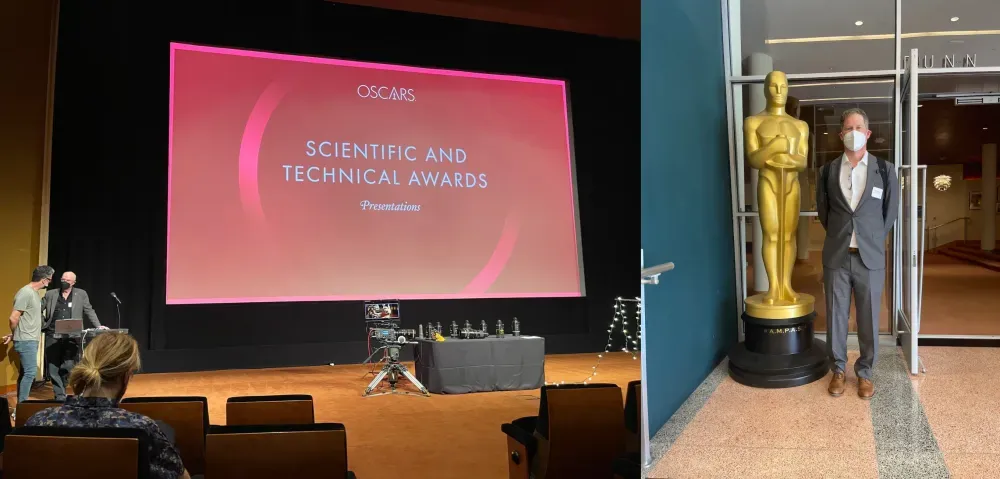
In 2002, fresh out of university, I flew from Ottawa to Winnipeg for my first job in visual effects. I had no signed contract yet, only an email from Frantic Films, a cheap hostel room, and an assignment to write a fluid solver. The render scheduler I wrote for those simulations became Deadline. The Academy later considered Deadline for Sci Tech Awards.
Starting at Frantic Films#
Jason Cobill, an old friend, had gone to work at Frantic Films, a Canadian-based visual effects studio. He emailed because they needed someone who knew computer graphics and software development, and I fit the bill. I was so excited about the possibility of working in Hollywood VFX that I didn't wait for a contract. A day or so after they told me I got the job, I was on a cheap flight from Ottawa to Winnipeg, living in a $20/night hostel, and showing up to work to their apparent surprise.
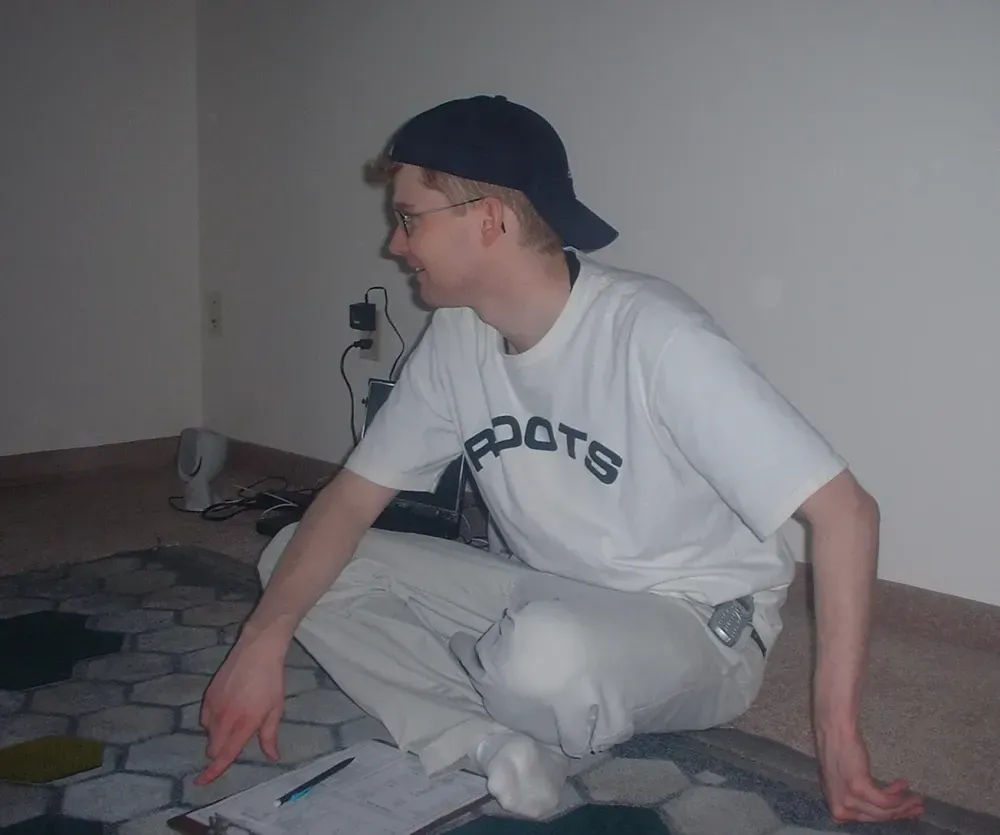
Talk about jumping in at the deep end: my first assignment was to write a fluid solver. Drawing on Jos Stam's 1999 Stable Fluids paper, I had a 2D implementation working within three days. The team was impressed enough that they moved me from the hostel to a hotel while I found proper accommodation and we agreed upon compensation, although I didn't have a signed contract until sometime later. By January 2003, five months later, I had built a 3D fluid solver and written my first SIGGRAPH short paper about incorporating dynamic solid objects into fluid simulations. We were also showcasing GPU-accelerated simulations in NVIDIA's booth at SIGGRAPH that summer, thanks to collaborator Christopher Batty's hard work.

The Render Farm Problem#
Fluid simulations are computationally intensive, with some taking days to complete. To keep working while simulations ran, I built a simple distributed scheduler I called "Cloud." It let me run simulations on idle machines throughout the office, using a shared filesystem to coordinate jobs.
Meanwhile, Frantic Films was facing a different but related problem. They were using Autodesk Backburner to manage their render farm of about 60 machines for VFX shots on "The Core." Backburner was so unreliable that they had an employee working night shifts to restart the server whenever it crashed. Without this human watchdog, they'd come in each morning to find failed renders and missed deadlines.
During a discussion about this problem in early 2003, we proposed to Chris Bond, the head of the VFX studio, that we should adapt my fluid simulation scheduler, Cloud, into a render farm manager. The team agreed and we split up the work: Mark Wiebe would write plugins for 3D software like Maya and 3ds Max, while I handled the slaves, the swarm scheduler, and user interface. Bobo Petrov, a 3DS Max scripting genius, worked on the 3DS Max submission interface.
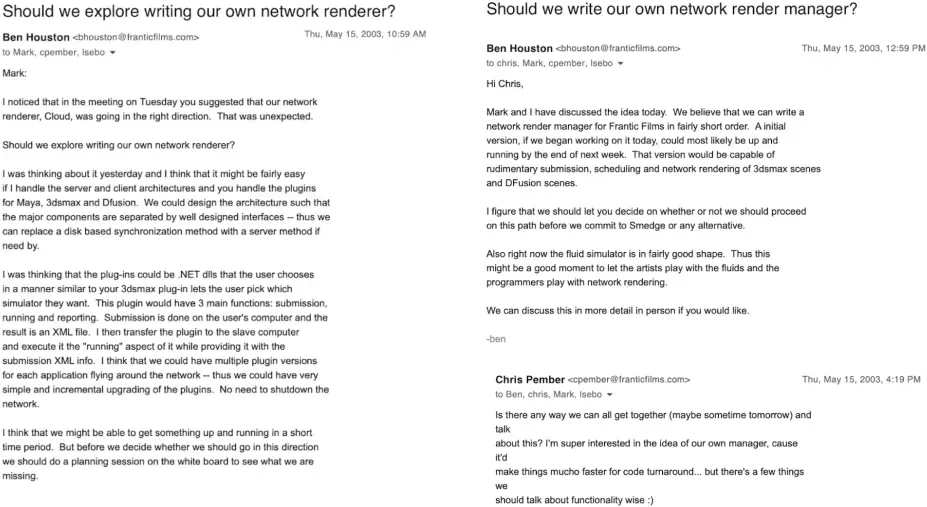
The initial emails also show Chris Pember's support for Deadline from the start. Chris was a 3D generalist at Frantic Films and a never-ending source of good ideas and support.
Engineering Philosophy: Embrace Simplicity#
Backburner's failures showed us that complex central servers were a single point of failure. Instead of building another one, we used the Windows file system itself as our database. File renames handled locking, and timestamps managed health checks. Workers ran stochastic cleanup of orphaned jobs. The system was plain and robust.
We deployed this system, now called Deadline, at Frantic Films within a few weeks. The night-shift restarts stopped.
The First External Users#
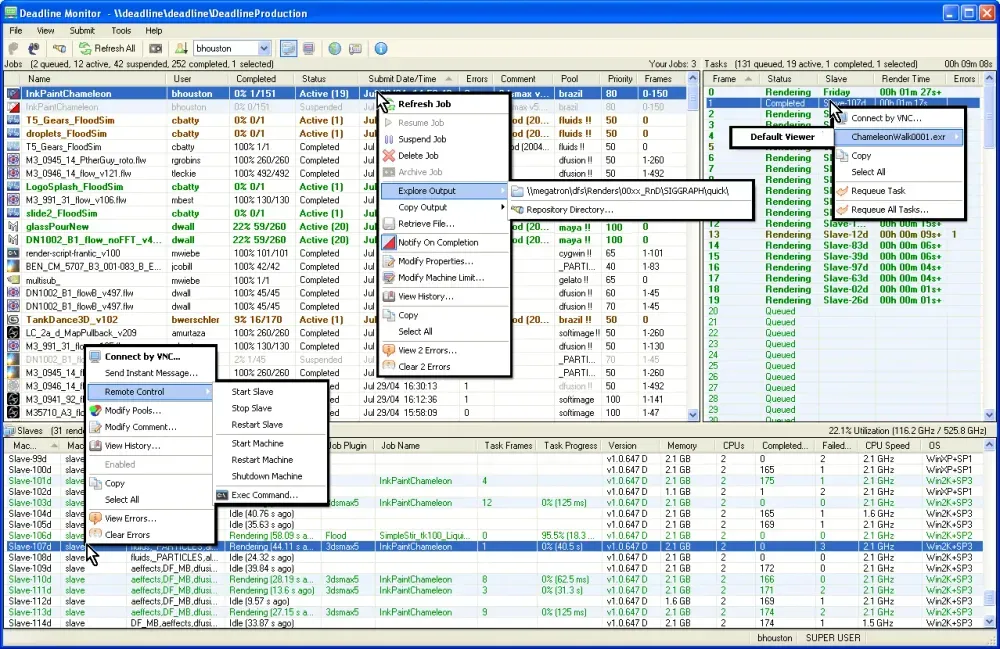
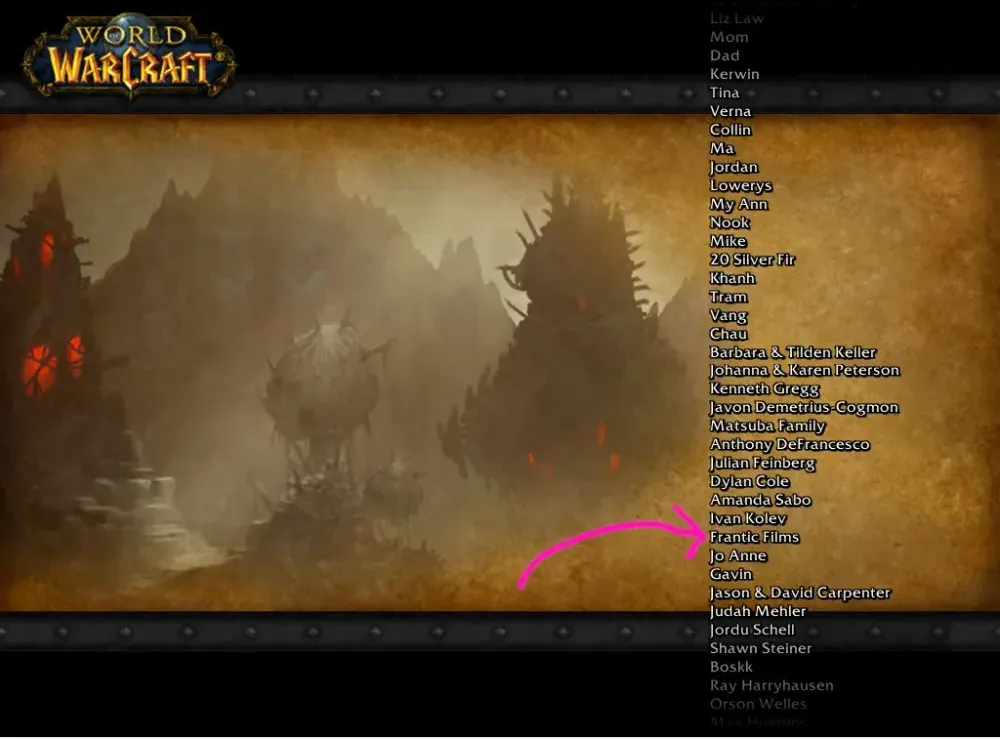
Chris Bond, head of the VFX studio, arranged for Blizzard Entertainment to become our first external user. John Burnett at Blizzard needed a reliable render farm manager for the World of Warcraft cinematics. With a lot of help from John, we got Deadline working on their ~120 machine render farm after some initial hurdles. Our reward? A credit in the original World of Warcraft release as well as a great endorsement for our product launch:
"Deadline ™ made our network rendering problems a thing of the past." -Blizzard Entertainment
The Blizzard deployment helped justify Frantic Films Software. Some worried we'd be selling our competitive advantage to other VFX studios, but the opportunity was too good to ignore. We ran a beta program in spring 2004 with over 100 VFX studios and artists. We used their feedback to choose the v1 feature set that we launched at SIGGRAPH 2004. Around this time, we brought on Ryan Russell to become the permanent lead developer of Deadline.
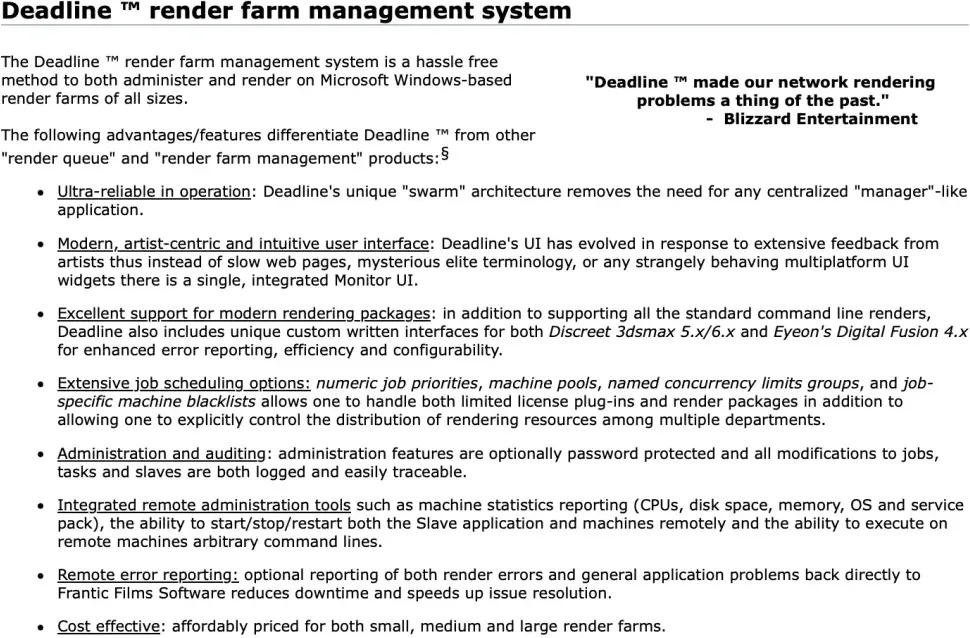
I was doing both marketing and sales at that time, so I closed our first customers, including the large Computer Cafe VFX studio in LA. I also built the first version of the software.franticfilms.com website using a custom wiki syntax-based static site generator (before markdown static sites were cool!), and filled it with documentation for both Deadline and our fluid solver.
Deadline After I Left#
I left Frantic Films VFX in early 2005 to start my own company, Exocortex, wanting more control over my entrepreneurial destiny and a focus on software instead of VFX production. Deadline kept growing. After some years under Prime Focus, which acquired Frantic Films VFX, Chris Bond created Thinkbox Software and acquired the Deadline IP. Thinkbox made Deadline its core product and pushed it into far more studios.
Studios used Deadline on hundreds of major productions: Harry Potter, Game of Thrones, Star Trek, Star Wars, Transformers. Deadline became common across major VFX productions. The Academy considered it twice for Technical Achievement Awards, in 2006 and 2022. We didn't win, but presenting to the judges was incredible.
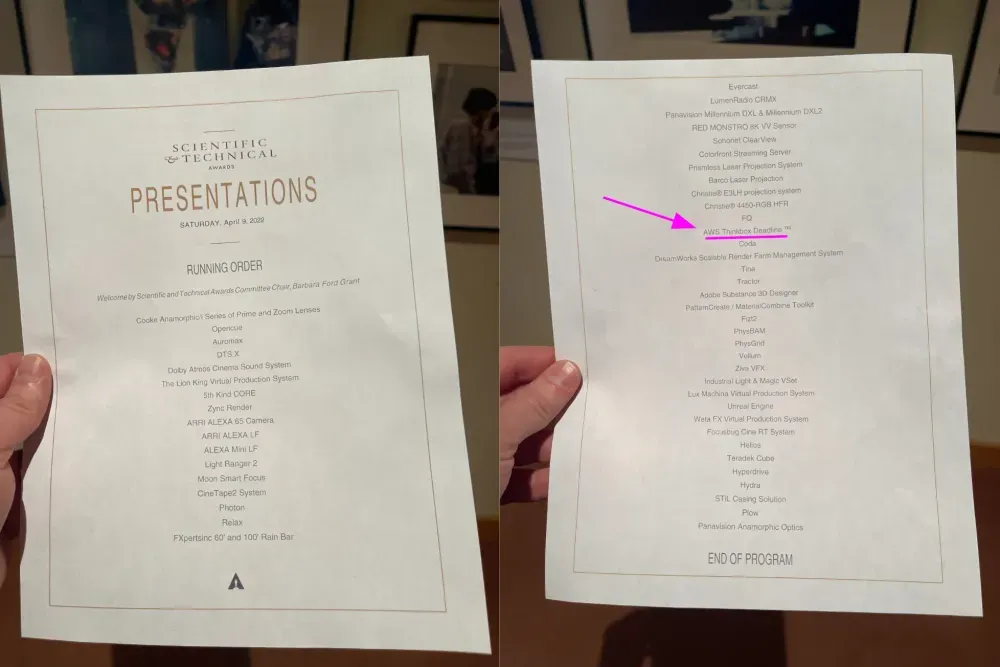
Amazon acquired Thinkbox in 2017. AWS saw Deadline as key infrastructure for moving VFX rendering to the cloud, a strategic response to Google's acquisition of Zync.
Deadline worked because it solved a painful production problem that existed at almost every VFX studio. Every studio renders. Only some need fluid sims. The file-system architecture looked crude, but it kept working when Backburner didn't. The beta program showed us which features mattered before we committed to v1.
Software I wrote as my first job out of university ended up inside major film and television pipelines for the next two decades. Deadline started as an internal tool at a single studio, not a funded startup. We found the market by solving the render farm failures in front of us first.
This post was discussed here on Linkedin and here on Reddit.